
Are you ready for change?
6 use cases explored in detail
The revolution that is coming (Web3, AI, blockchain) will impact ALL fields of activity: aeronautics, agri-food, banking & insurance, commerce & retail, accounting, controls & certifications, home automation, personal data, energy, finance, customer management, inventory management, real estate, pharmaceutical industry, art market, mobility, cultural sector, trading, proof of ownership, distributed resource sharing, pay-for-view, scientific research, administrative services, product traceability, transport & logistics, title validation, online voting…
We have selected 6 of them to explore in depth the infinite possibilities offered by SEGMENT.
Example 1
Aeronautics
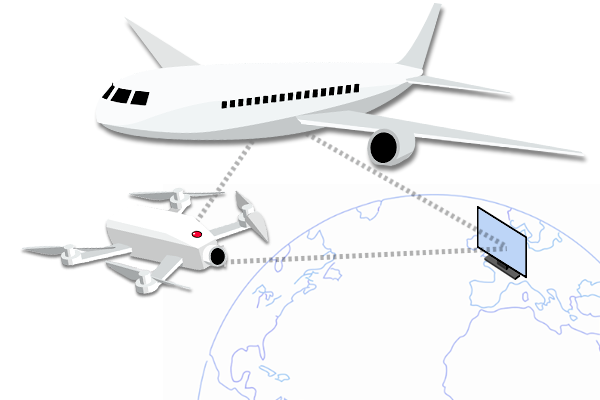
In an airline, every aircraft (plane or drone) becomes a “connected node” with its own ID (identification/authentication) and the ability to record encrypted data directly into SEGMENT.
This data can include:
- Flight frequency, durations, routes
- Number of passengers and crew
- Anomalies, incidents, delays, breakdowns
- Technical reports and inspections (when, by whom, where)
- Parts replaced or scheduled for replacement (when, reference)
Additionally, thanks to the aircraft’s sensors, all necessary information can be transmitted to the ground in real time, fully encrypted and secured. For sensitive missions (surveillance, security, border control), the guarantee that this data remains unusable even if intercepted demonstrates the full cryptographic power of SEGMENT.


Example 2
Health data
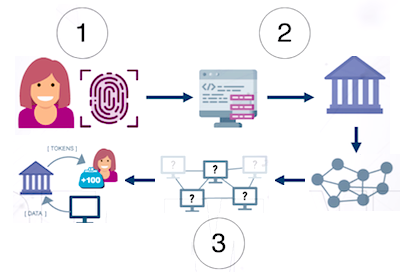
SEGMENT fully complies with European personal data regulations (GDPR).
Lise has stored her personal health data (social security number, blood type, test results, medical exams, etc.) in encrypted form in SEGMENT. She controls access to her data by defining exactly who can view it and under what conditions:
- Healthcare providers (doctors, hospitals, social security) have free, permanent, and unlimited access.
- Public institutions (government agencies) have permanent access but each consultation is paid to Lise.
- Private entities (companies, insurers) must request access for specific data; Lise receives a precise request, accepts or refuses, and is remunerated if she accepts.
Example 3
Drone delivery
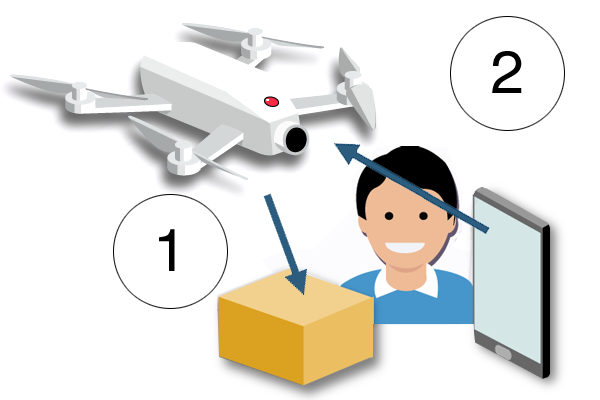
Xavier orders a product online and chooses his delivery day and time slot.
- At the scheduled time, a delivery drone locates itself above his home and sends him a notification.
- Xavier steps outside with his phone, which initiates a secure handshake with the drone.
- Once the drone receives identity confirmation, it lands and Xavier retrieves the package.
SEGMENT instantly processes the payment: the amount is transferred in seconds from Xavier’s wallet to the merchant’s wallet in the chosen currency (fiat or crypto). Once payment is confirmed, the drone issues a receipt and invoice directly to Xavier’s phone.
Example 4
Agri-food
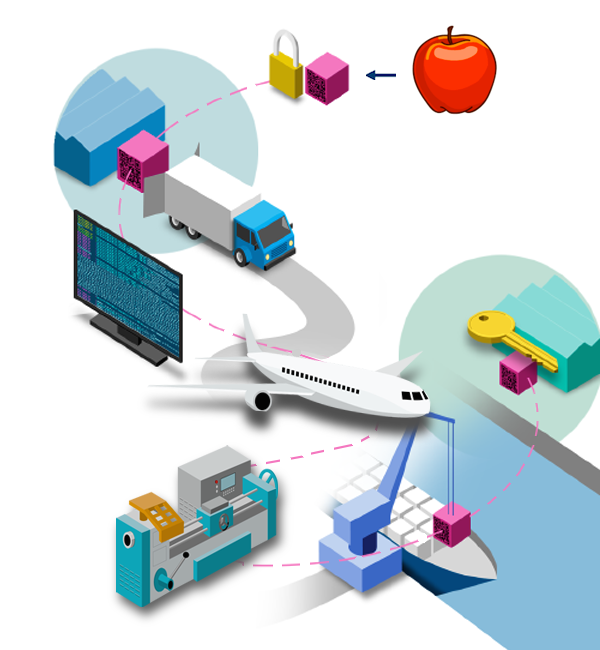
Franck, concerned about ethical and responsible consumption, wants to know when, how, with which ingredients and from which country a food product was made, and how it was transported.
When an agri-food company joins SEGMENT for product traceability certification, it commits to providing reliable and verifiable information at every step of the supply chain.
Franck simply scans the barcode with his phone and instantly accesses the full, certified history of the product.
Example 5
The smart home
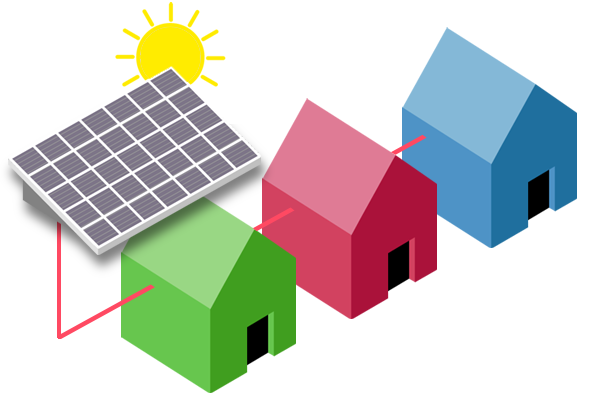
Who hasn’t dreamed of a smart, energy-efficient home that actively contributes to its environment?
For this vision to become reality and integrate into our shared future, the home must:
- Respond to commands while preventing unauthorized access
- Securely open to temporary guests (e.g., Airbnb) via smartphone
- Produce clean energy (solar) and redistribute surplus to the community
- Enable connected devices (fridge, water heater, etc.) with their own wallets to transact autonomously
- In co-ownerships, allow all residents to share resources fairly
SEGMENT was designed precisely for this future.
Example 6
Online voting
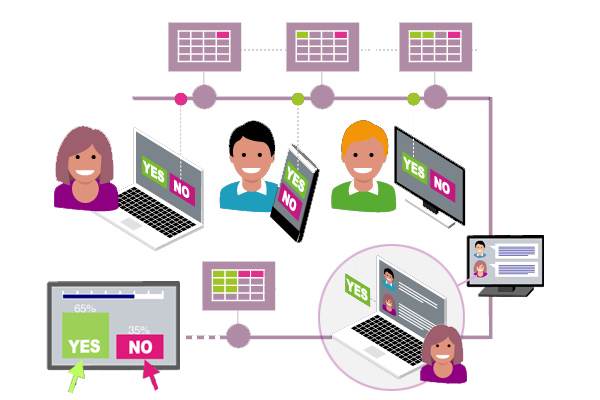
SEGMENT enables fully secure online voting processes:
- A vote is open for a defined period (e.g., one month) – anyone can vote or change their vote at any time.
- A secure discussion interface is attached, allowing voters to debate in real time.
- Results are displayed live, so everyone sees the current majority.
- Voters can change their mind after reading arguments (e.g., Lea votes NO, discusses with Mike, then switches to YES).
- At closing, the final result is known, but individual votes remain secret (unless explicitly made public).
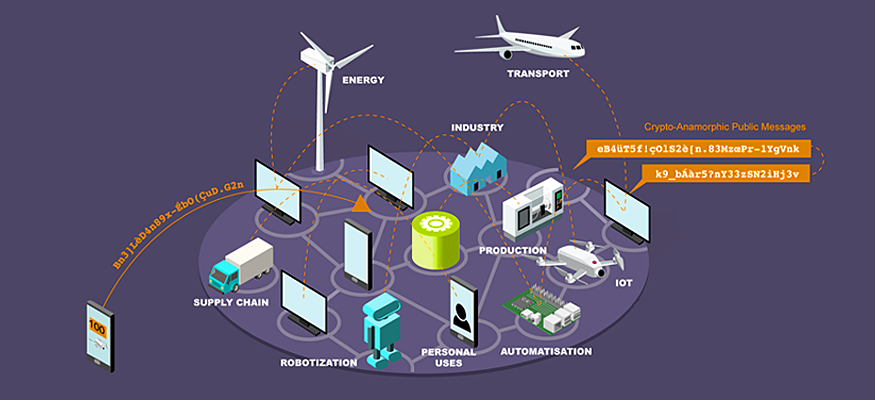
SEGMENT, a “society of conversing machines”.
How does it work?
Flight data (e.g., geolocation every minute) is encrypted end-to-end: it leaves the aircraft encrypted, transits encrypted, and arrives encrypted on the ground (and vice-versa for ground → aircraft), where it is stored within SEGMENT.
With no physical server centralizing this information, no attack can target any kind of database, because none exists.
No node (machine connected to SEGMENT) holds a complete version of the data (native horizontal-sharding technology).
In the unlikely event that an attacker were to access and decrypt all or part of the information contained in the blocks stored on their own machine, they would obtain only an infinitesimal, insufficient fragment, not enough to reconstruct any complete or usable dataset.
→ SEGMENT provides a level of data protection and security resistant to attacks and intrusion attempts.
The Market
Even when accounting for the devastating impact of the Covid crisis on this sector (with air traffic only returning to pre-Covid levels between 2023 and 2025), Airbus and Boeing project an almost twofold increase in the global fleet between today and 2038.
The worldwide fleet would therefore approach 50,000 commercial aircraft within the next twenty years.
Major technological innovations — notably Airbus’s plan to introduce a “zero-emission” commercial aircraft by 2035 — also contribute to these forecasts.
Sources: Les Echos Futura-Sciences
How does it work?
Each requester (doctor, administration, company) has a machine connected to SEGMENT (a node) that will transact with Lise’s machine.
Their authentication IDs are written into the block containing Lise’s data, together with their access rights.
Every request is treated as a transaction by the nodes responsible for processing the information:
-
The randomly selected nodes explore Lise’s health blocks: if the requester’s machine ID is found [condition 1 met], they proceed to the next step.
-
If access is open and free, the requested data is sent directly to the requester’s machine.
-
If access is open but paid, the nodes check the requester’s wallet: if it is sufficiently funded, the transaction is initiated, the amount is debited from that wallet and transferred to Lise’s wallet.
-
If access is closed and paid, the nodes send a notification to Lise’s phone, requiring her to accept or reject the request. If she accepts [condition 2 met], the transfer is carried out wallet-to-wallet and the requested data is sent to the requester’s machine.
→ Lise remains in full control of her personal data and can monetize it depending on the requester and the intended use.
The Market
According to the Global Big Data in Healthcare Market – Analysis and Forecast 2017–2025 report, the Big Data market in the healthcare sector was valued at USD 14.25 billion in 2017.
This Big Data & Healthcare market is projected to reach USD 68.75 billion by the end of 2025.
This phenomenal growth is largely driven by the explosion in the volume of health data, which was expected to exceed 2,312 exabytes by 2020.
The increasing adoption rate of connected devices and health applications also significantly contributes to this rise in data volume.
Source: lebigdata.fr
How does it work?
The smart contract created at the time of the order specifies the sequence of events:
-
When the order is placed, the wallet on Xavier’s phone is evaluated: timestamp, available balance, hashing checks.
-
If Xavier holds at least the required amount, delivery can proceed [ condition 1 met ]: the amount is debited by SEGMENT and temporarily escrowed — eliminating any risk of payment default.
-
When the drone and Xavier’s phone are geolocated at the delivery point [ condition 2 met ], a transaction is launched.
-
The nodes verify the IDs of the drone and the phone; if both are validated [ condition 3 met ], the drone is authorized to land.
When the drone’s sensors send the notification “package has been retrieved”, the nodes then initiate the payment process:
-
The drone’s wallet is credited with the escrowed amount, and it returns to base [ condition 4 met ].
-
If delivery cannot take place [ conditions 2 or 3 not met ], the drone returns with the package: Xavier’s phone wallet is recredited with the escrowed amount minus the fees and penalties stipulated in the contract.
→ When all operations are completed, the relevant blocks are timestamped and updated on all concerned machines.
The Market
The civil drone market is experiencing exponential growth. Between 2012 and 2017, French manufacturers and operators recorded 900% growth, according to a study by Erdyn.
In 2018, 78% of the French civil drone market value was represented by professional drones (versus 22% for recreational drones). Teal Group Automation estimates the market size to reach nearly 89 billion dollars by 2023.
Sources: BPIfrance | Ministry of Economy and Finance
How does it work?
Each ingredient used in the product is recorded in a decentralized text file (IPFS): origin, manufacturing date, identity of the producer.
Each step of the production process is added to the file: when, how, on which machine and in which production unit, according to which protocols and controls (international standards).
Once the product is packaged (when, where, palletization, etc.), the file is updated with information on when and which transporter took charge of it and delivered it.
When a request is made, the nodes in charge of the transaction verify that the file exists: its unique code and its control hash are written in a block. If the file exists [condition 1 met], it is retrieved and its hash is generated. If this hash matches the hash written in the block [condition 2 met], it is sent to Franck’s phone.
Since the product traceability is confirmed and meets Franck’s expectations, he can purchase it with full confidence.
→ In this scenario, SEGMENT does not generate a wallet-to-wallet transaction, but certifies the reliability and origin of a document.
The Market
The sale of products dedicated to food traceability and identification is valued in the billions of dollars, with an annual growth rate of around 10%.
Blockchain technology will notably help combat fraud. The cost of fraud in the food sector is estimated at nearly 40 billion dollars per year (according to a 2016 PwC study). A well-known example of food fraud is the 2013 horse meat scandal. Thanks to blockchain technology, producers will be able to detect any modification to a product in real time, as information is transmitted instantly.
Defective or non-compliant products can be immediately withdrawn, thereby avoiding the costly removal of entire batches and the resulting food scandals that damage a company’s credibility.
Source: MBA MCI
How does it work ?
Dom is having his smart home built in the small village of his dreams…
He opens and closes his doors, windows, and shutters with a tap on his phone: the phone, connected to the home automation system, launches transactions authorizing these interactions provided that the required authentications are validated.
When he goes on vacation, he rents out the house: the front door lock (a connected lock) will only open if the dialogue between the lock and the visitor’s phone results in a validated transaction. As soon as the door opens, the rental amount is transferred wallet-to-wallet in the currency chosen by the visitor. On the day of departure, when the door is closed, a conditional timestamp in the smart contract prevents it from being transactionally reopened.
The surplus of unused photovoltaic electricity is sent directly to neighboring houses: connected meters calculate the transmitted kWh, and at regular intervals these meters communicate with Dom’s meter and transfer the corresponding amount agreed upon collectively (they decided to create a local village cryptocurrency for their exchange of goods and services).
In winter, Dom’s electric heaters consume more than the energy produced by his solar panels, so he must buy additional electricity. The heaters connect to a platform where they purchase the cheapest available energy at that moment, paid through smart-contract mechanisms.
→ SEGMENT: a new energy for the future.
The Market
€790 million: this was the revenue of the home automation sector in France in 2019, according to market research institute GfK. On a global scale, the market is valued at around $100 billion. Year after year, consumers are increasingly drawn to connected devices designed for their homes.
According to Emilie Garcia, Head of the Ecotechs Division at Bpifrance, and Sébastien Montusclat, Digital Sector Manager, the digitalization of the sector—through IoT and data usage, among other things—is essential to accelerate the transformation of buildings toward a responsible and self-sufficient model.
The development of the smart home is both a sign of evolving lifestyles and a first layer that integrates into the smart building and, in the longer term, into the smart city.
Sources: BPIFrance · Selectra
How does it work?
SEGMENT is characterized as a DDLT, a dynamic blockchain that updates its blocks with every transaction. A vote is just another wallet: it is a timestamped and secured container holding something — a monetary amount, health data, a number of kWh, or a ballot, it doesn’t matter… these are “tokens,” which can be fungible or non-fungible (NFT).
The wallet containing Léa’s vote is updated each time she revotes, in the same way her cryptocurrency wallet is updated whenever she conducts a transaction, sale, or purchase.
The issue of fraud (securing the protocol to prevent double or triple voting) is resolved: Léa only expresses one valid vote — the latest one; its timestamp is decisive.
This ability to vote multiple times while knowing the ongoing results offers several advantages:
-
it encourages participants to expose their arguments,
-
it frees them from the pressure of the “fateful day” and its theatrical presentation,
-
and it allows them the right to change their mind.